
R&D&I
We work to contribute our knowledge in climate research, as a pioneer in statistical regionalization, and we offer training for the support and strengthening of scientific capacities.

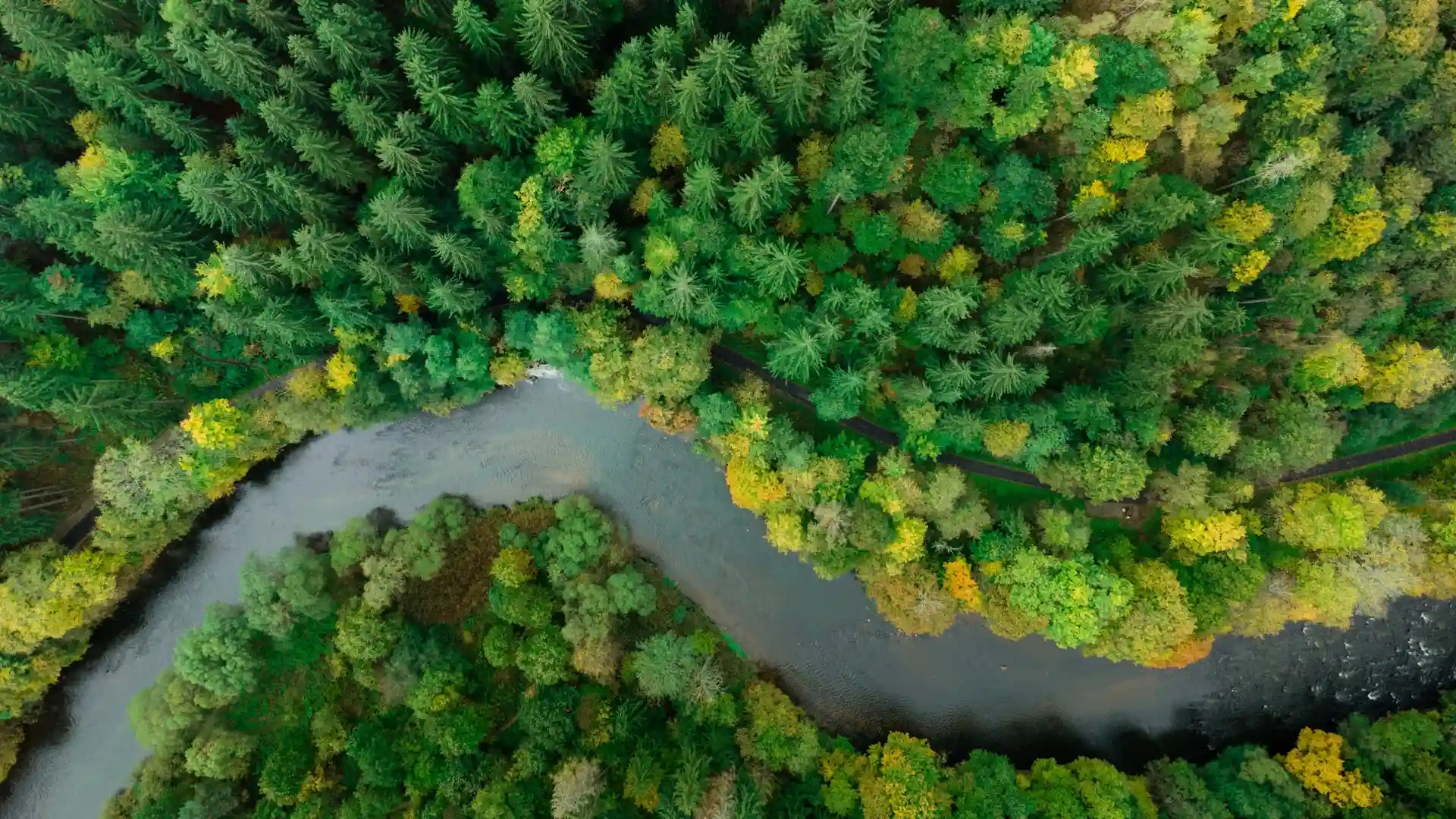
We provide a tool that combines climate science and predictive models. It helps optimize the performance of forest carbon sinks under future climate scenarios.
VisoCCarbono is a technology solution that combines science, climate data and predictive models to optimize the ability of forest ecosystems to absorb CO2, helping to plan reforestation projects that will remain effective carbon sinks 25 or 50 years from now, not just today.
From climate data to a decision map in six steps.
01 – Input data
10 climate models (CMIP6), four emission scenarios, more than 5,500 rain gauges and 2,500 thermometers, and 72 forest species of interest.
02 – Processing
Statistical downscaling of climate data to a 1 km resolution, including quality control and homogenization of all series.
03 – Suitability modelling
109 taxonomic units modelled to determine where each species can live today and in the 2050, 2070 and 2100 time horizons.
04 – Carbon sink calculation
Absorption potential by species and climate scenario for short- and medium-term horizons (2021-2050 and 2041-2070).
05 – Interactive viewer
Navigable maps, scenario comparison and downloadable reports for selected areas of interest.
06 – Who it is for and what it is for
Forestry consultancies, companies and investors in carbon credits, public authorities and the Spanish Office for Climate Change.
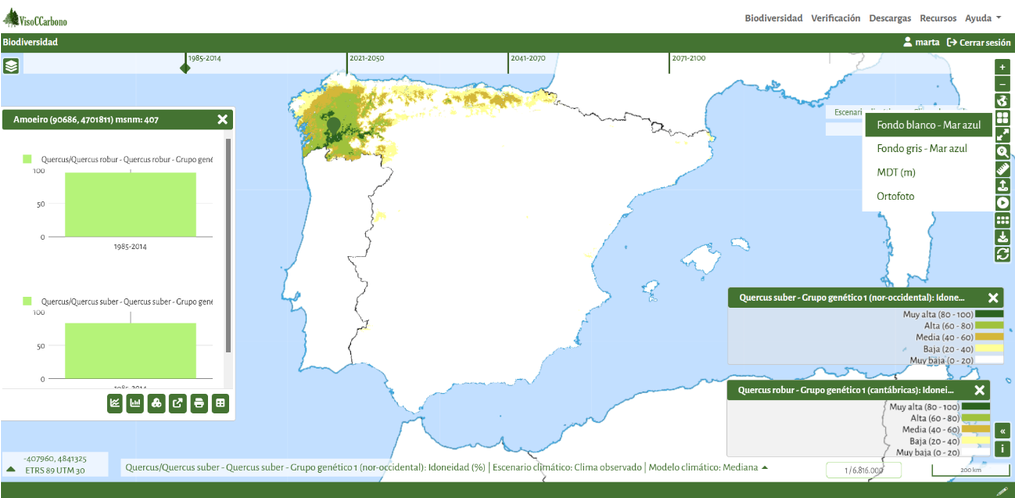
Why a viewer matters
The viewer developed as part of VisoCCarbono is an essential tool for visualizing, analysing and managing carbon data in forest ecosystems.
It not only improves our understanding of the carbon cycle; it also becomes a strategic tool for advancing sustainable policies and supporting informed climate action.
The following resources are available for download:

We work to contribute our knowledge in climate research, as a pioneer in statistical regionalization, and we offer training for the support and strengthening of scientific capacities.
We design tools to simulate expected changes in future climate and assess how they may affect us through risk and vulnerability analysis.